

Another in-depth tactical piece by our contributor Ryan Gunness
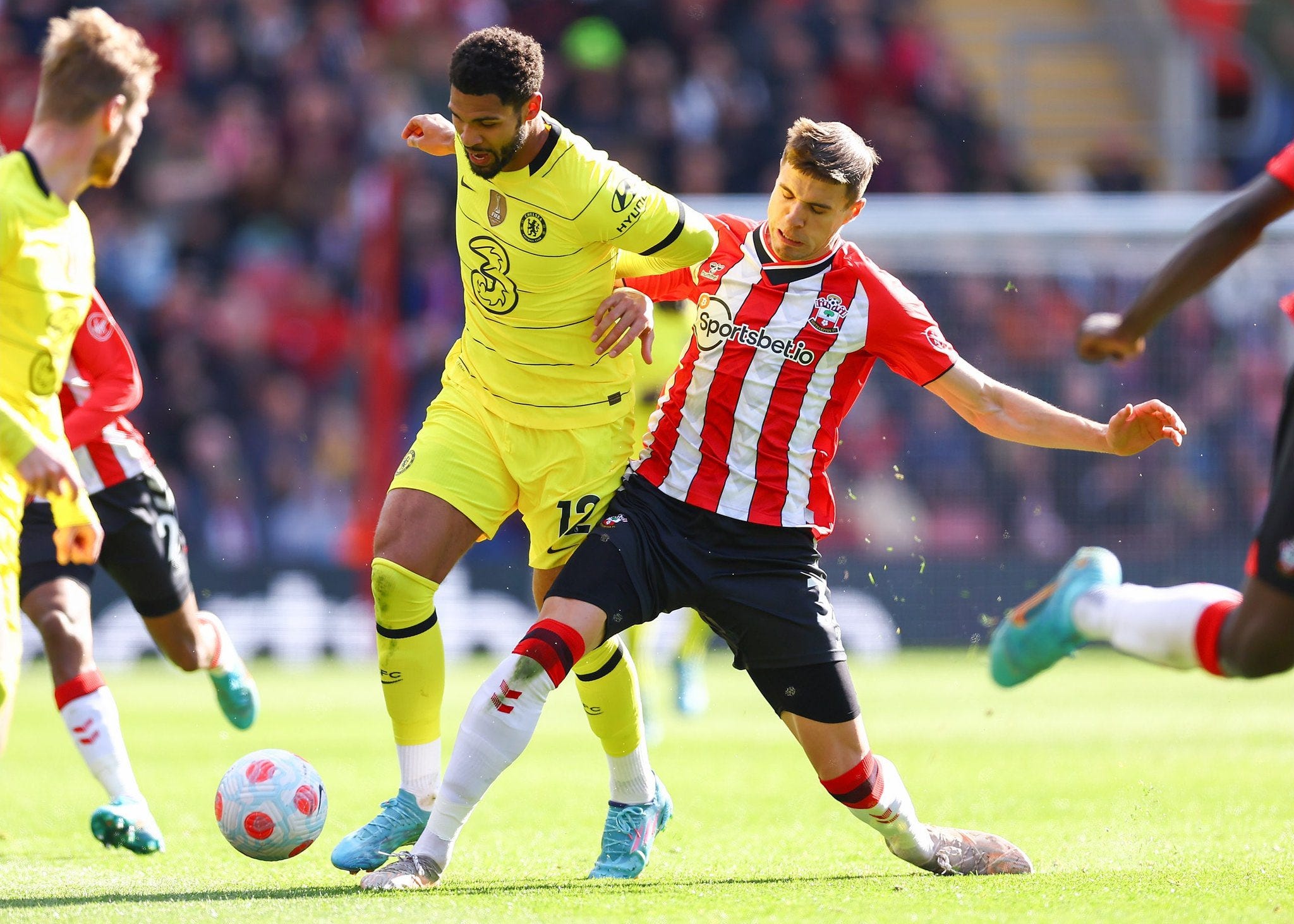
In Attack
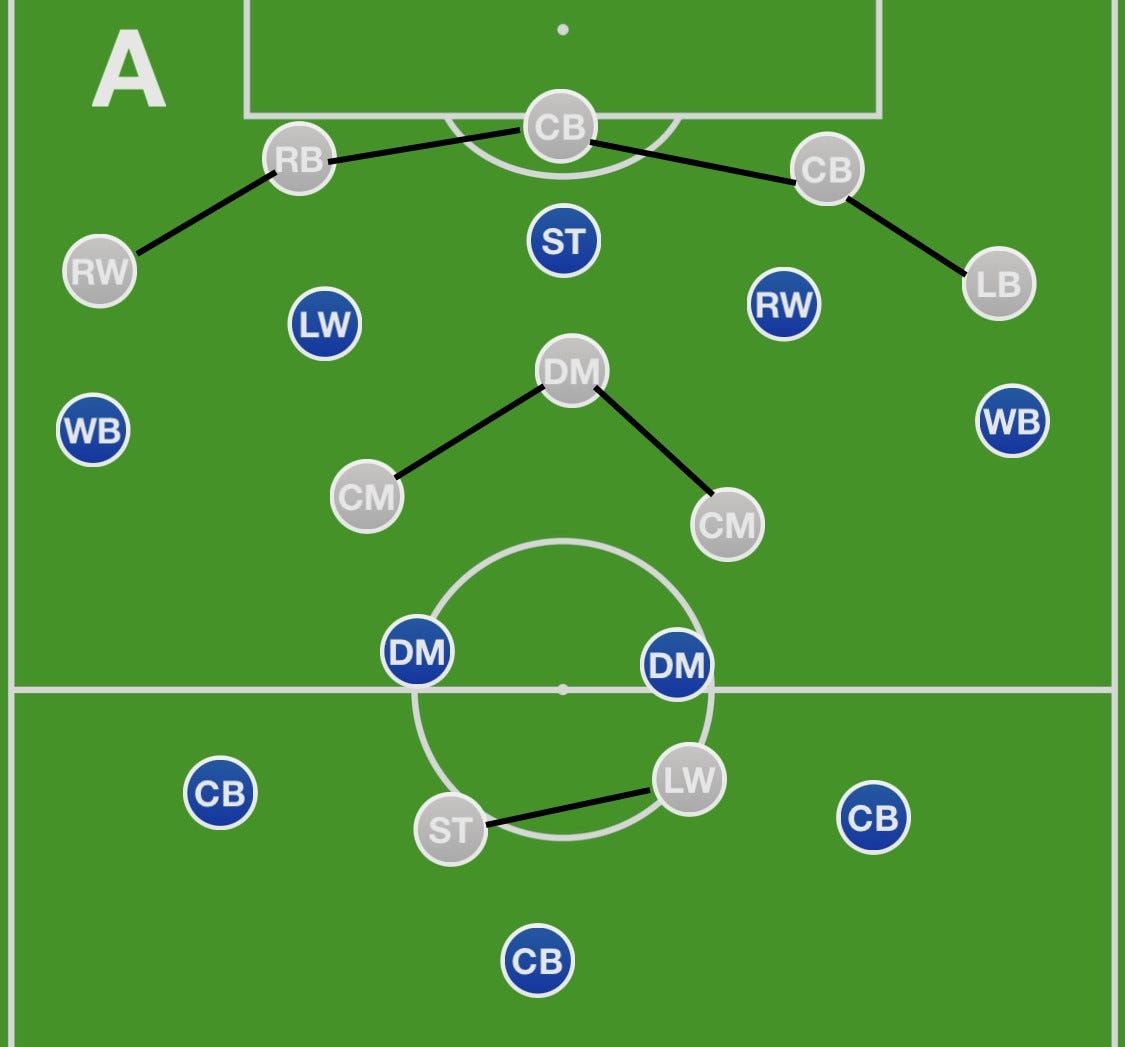
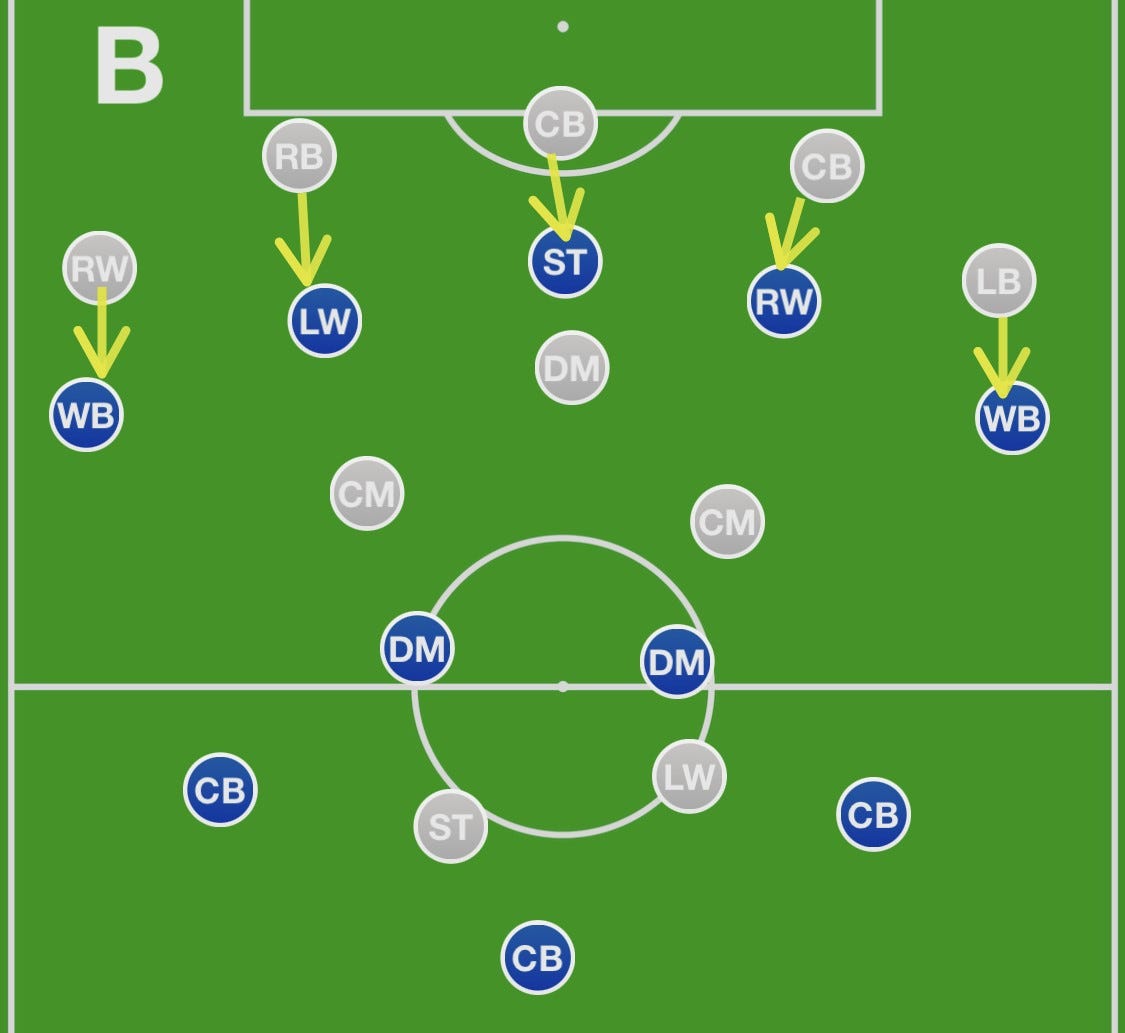
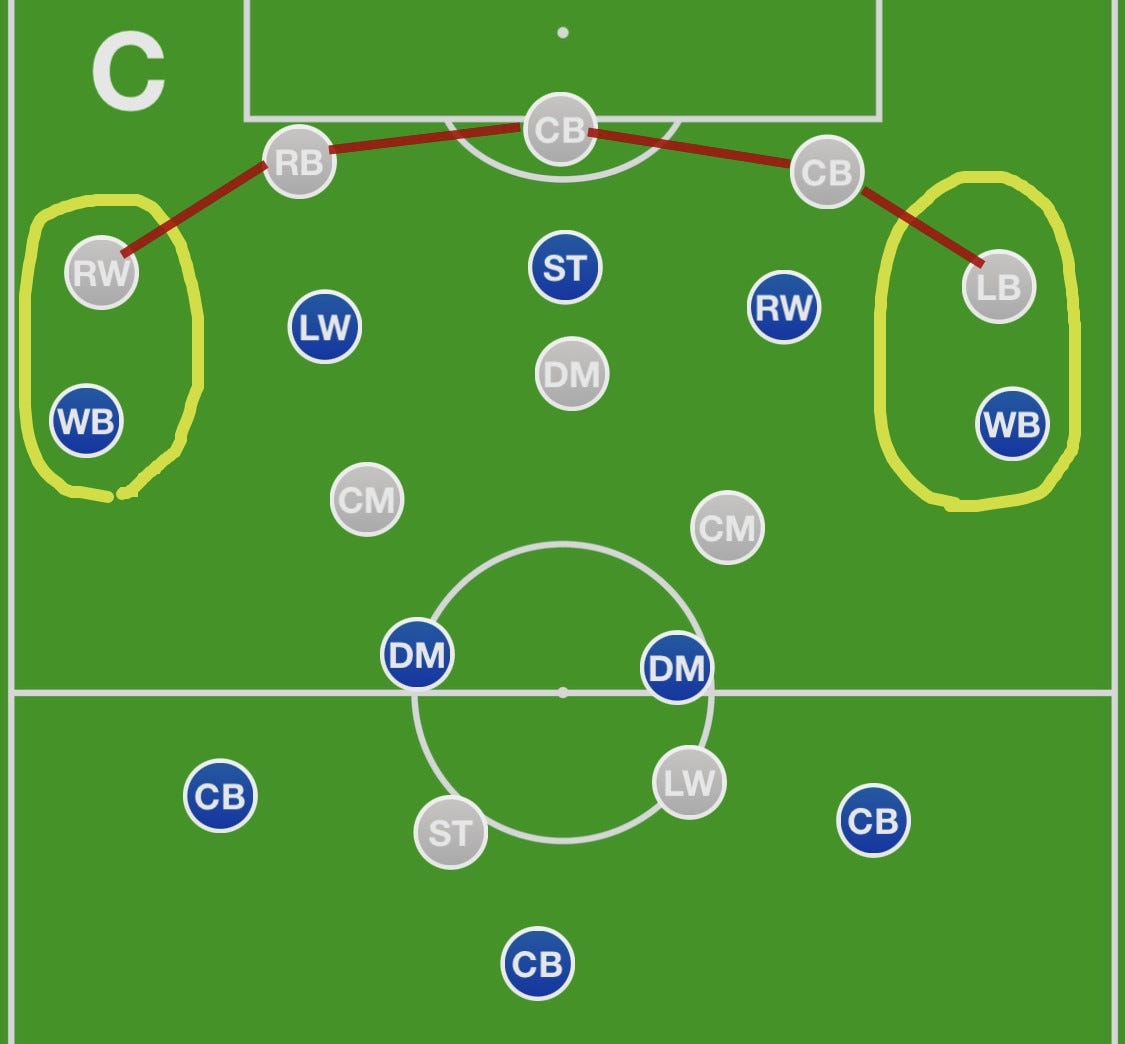
In the 1st leg, Real Madrid defended using a 5-3-2 as such (A). Here, Real Madrid’s back-line completely man-marked our forwards, making progression into their final 3rd very difficult (B). Notice here, that Chelsea’s wingbacks were very advanced during this phase. This allowed Real Madrid’s back-5 to keep relatively horizontal and compact amongst each other, creating an in-penetrable low-block as a result (C). Note that, it is this horizontal nature of Real Madrid’s back line which allows them to be compact, begging the question, what if Chelsea’s wingbacks took up a more inverted position instead? More particularly, through Ruben Loftus-Cheek.
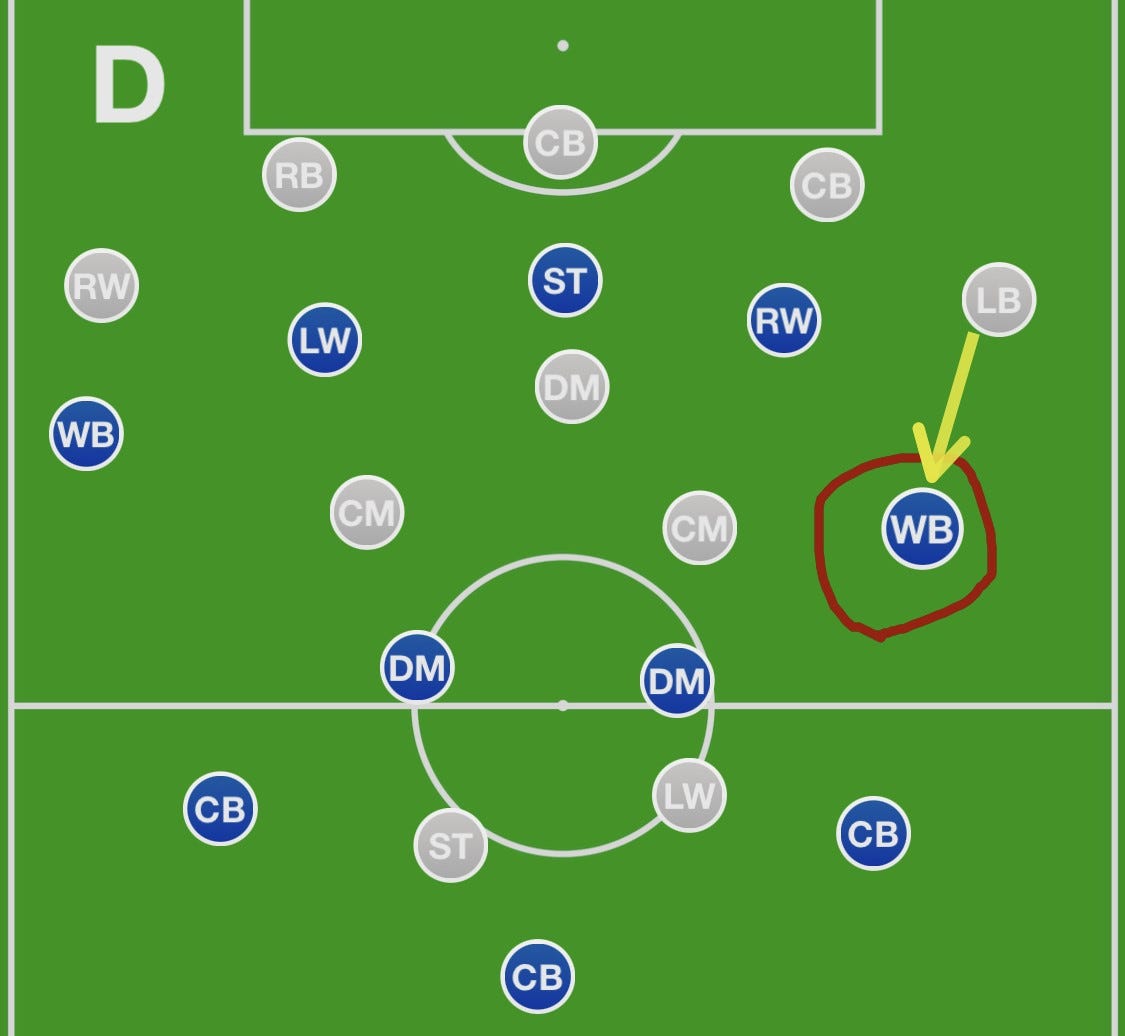
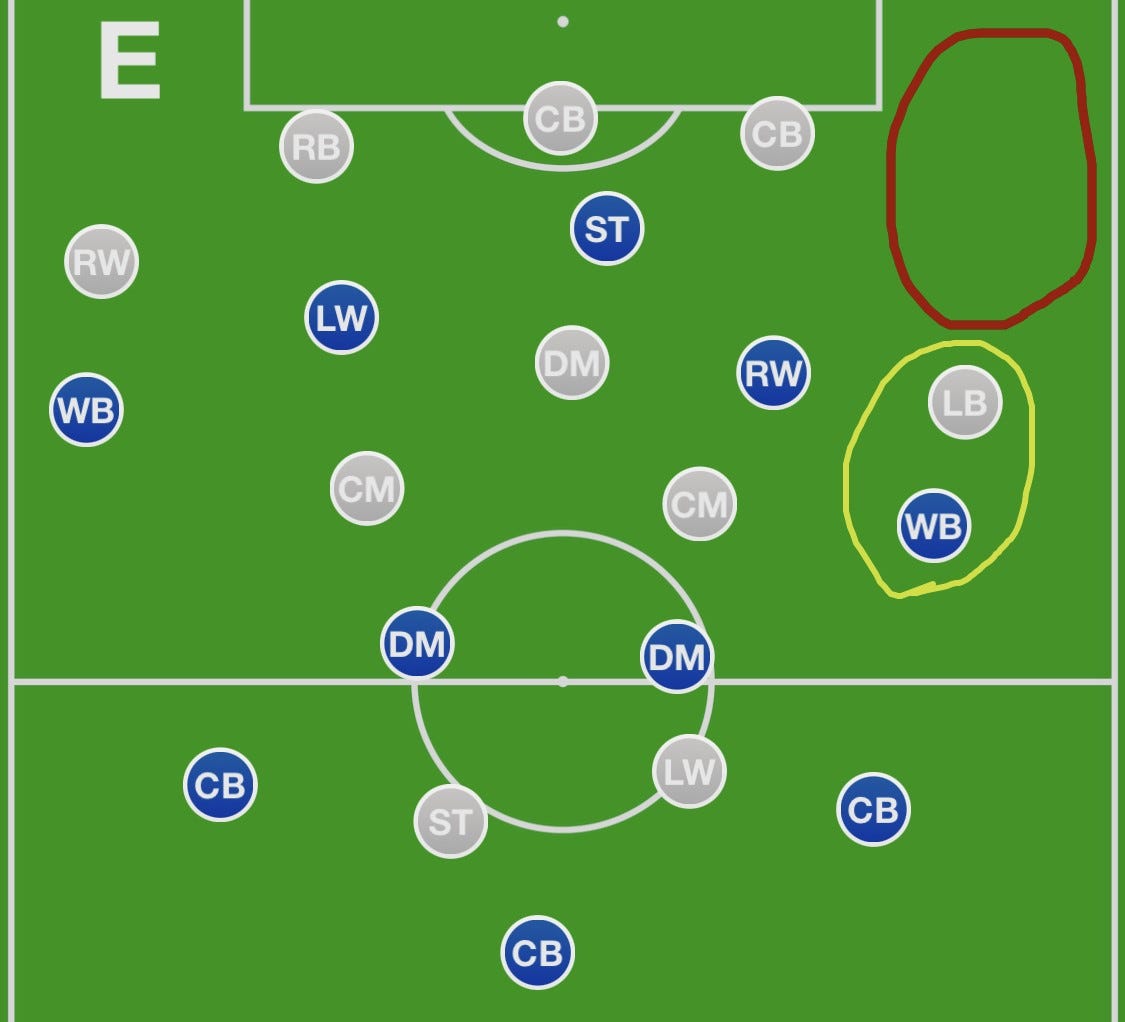
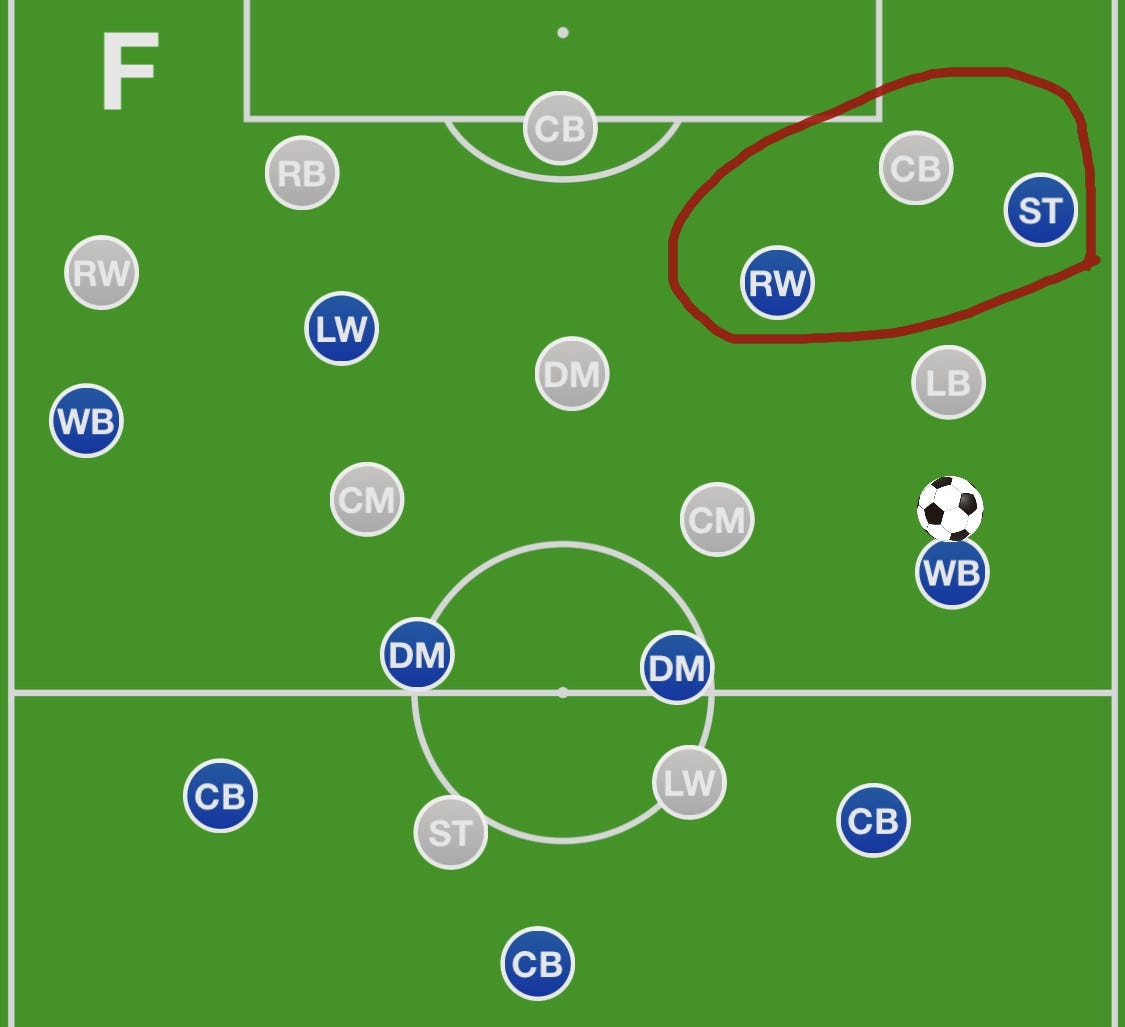
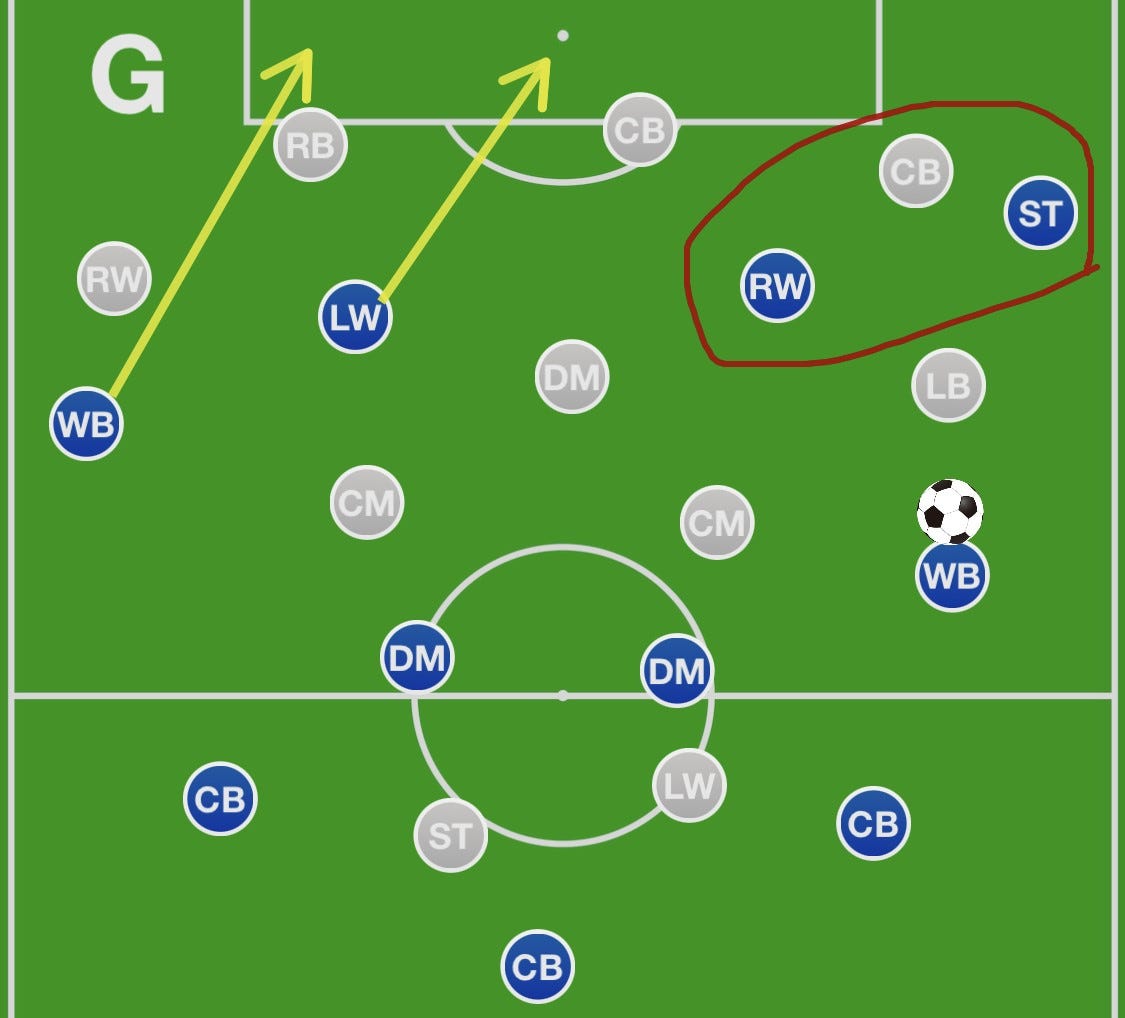
Since Real Madrid’s back-line took up a man-marking approach, having RLC tuck into wide midfield would draw Real Madrid’s wingback forward as such (D). This would be the first step in stretching/dismantling Real Madrid’s back-5, at which, Chelsea’s forwards would then attack the space left by Madrid’s wingback (E). At this point, for example, Havertz (ST) can drift wide into RW, with Mason (RM) making inverted runs as such. This would drag one of Real Madrid’s remaining CBs wide, spreading their back-line thin as a result (F). At this point, Timo/Pulisic (LW) can drift into ST positions (G), taking advantage of the gaps left in defense as such. All of a sudden, Real Madrid’s back-5 would now be dismantled, with Chelsea’s attackers being in prime position to take advantage of the gaps created. All starting with the simple movement of RLC tucking into inverted positions as a wingback.
In defence
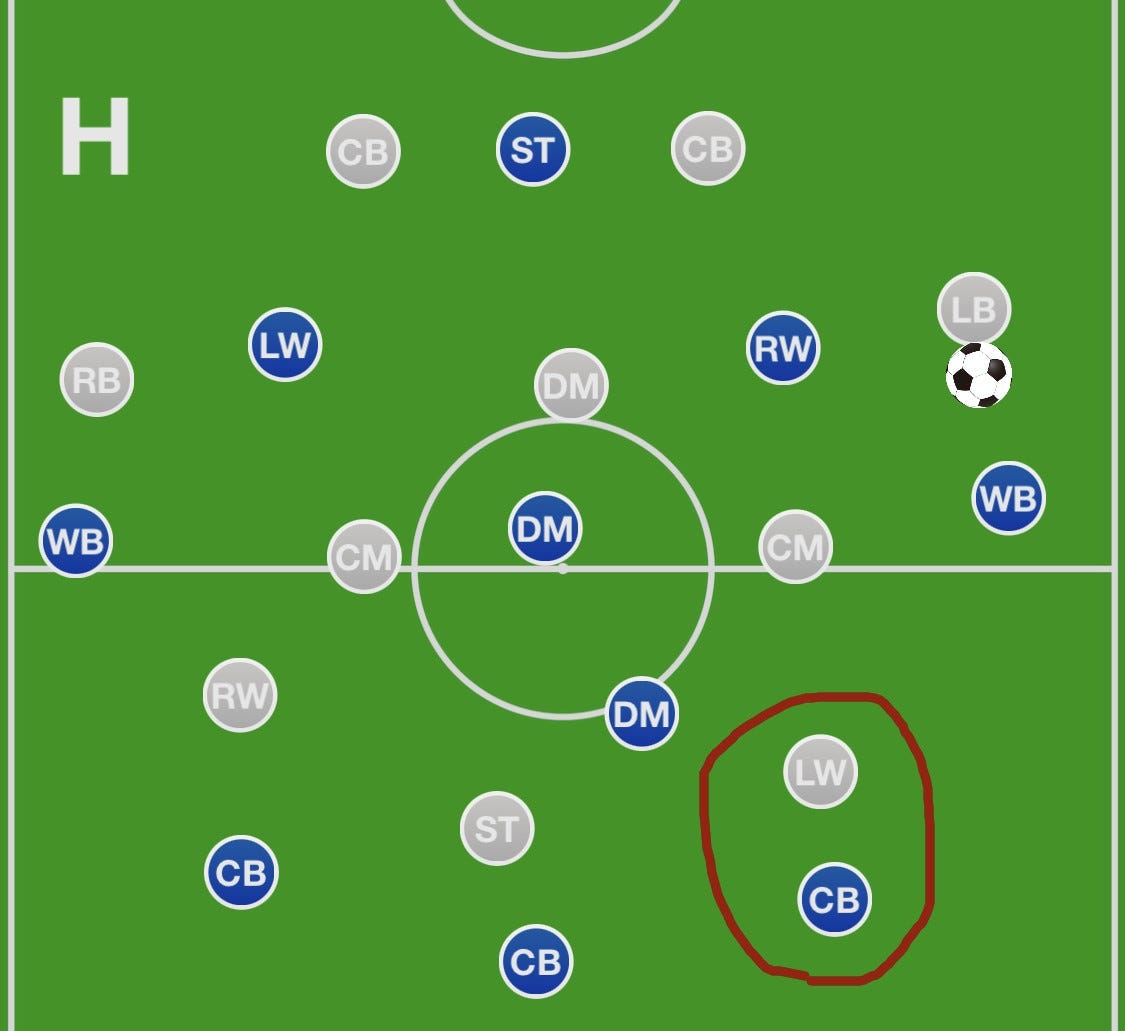
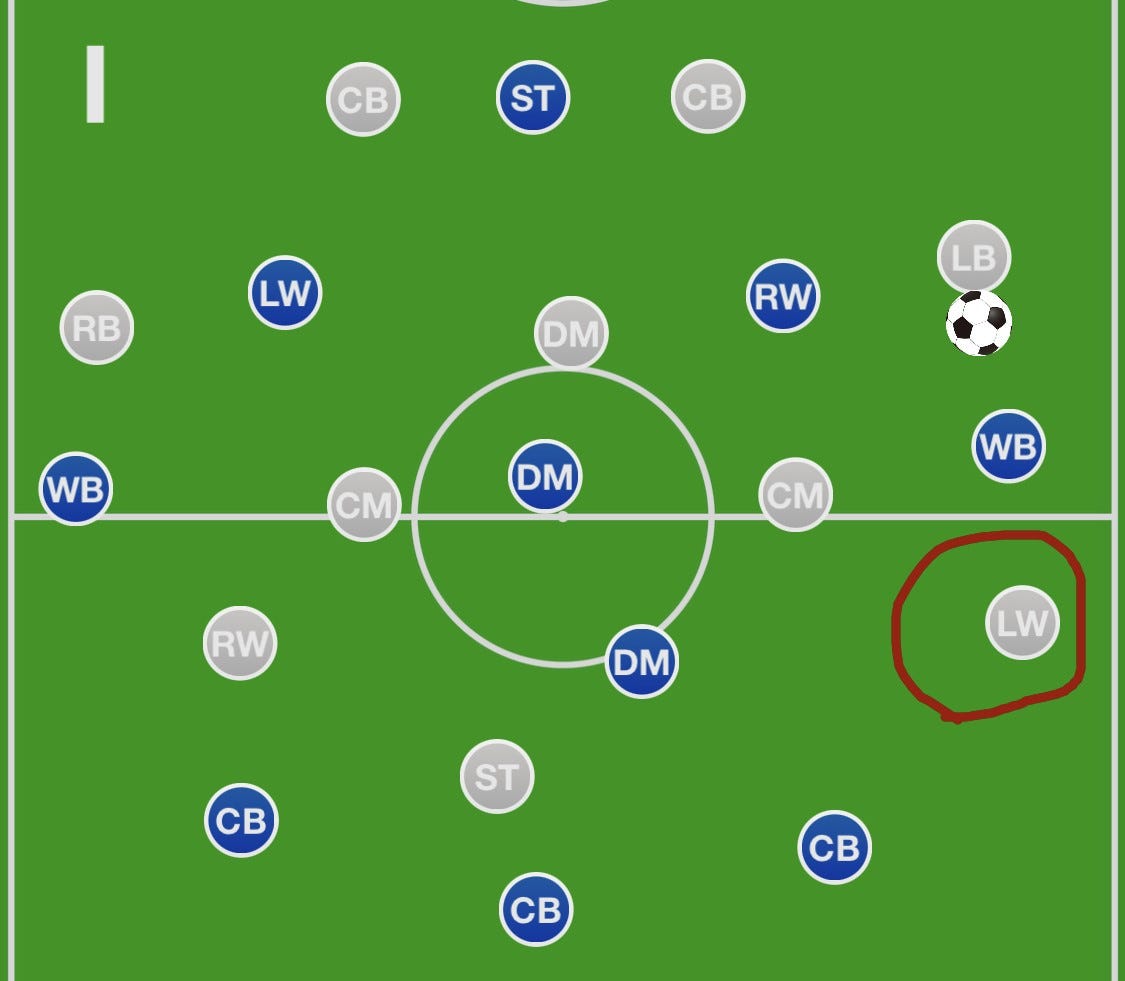
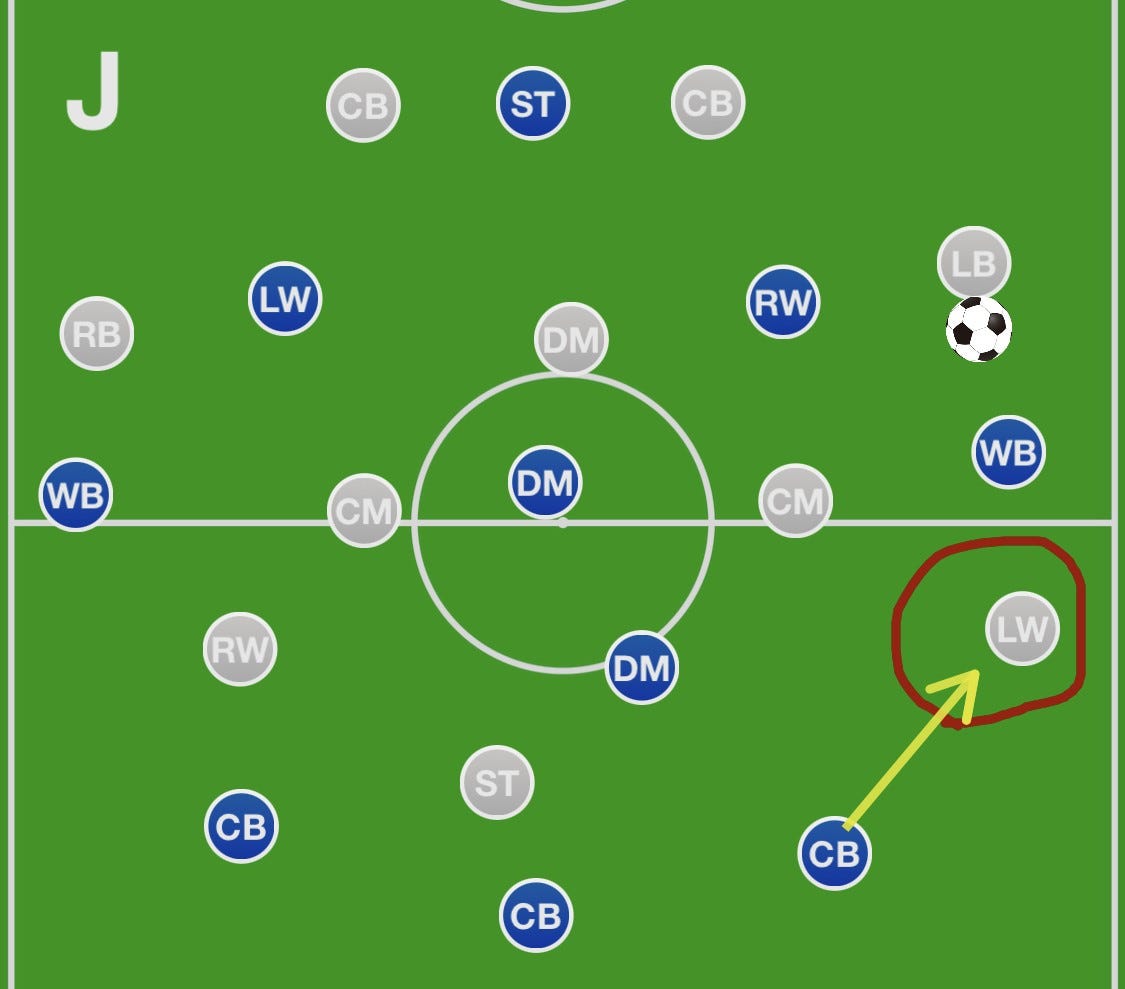
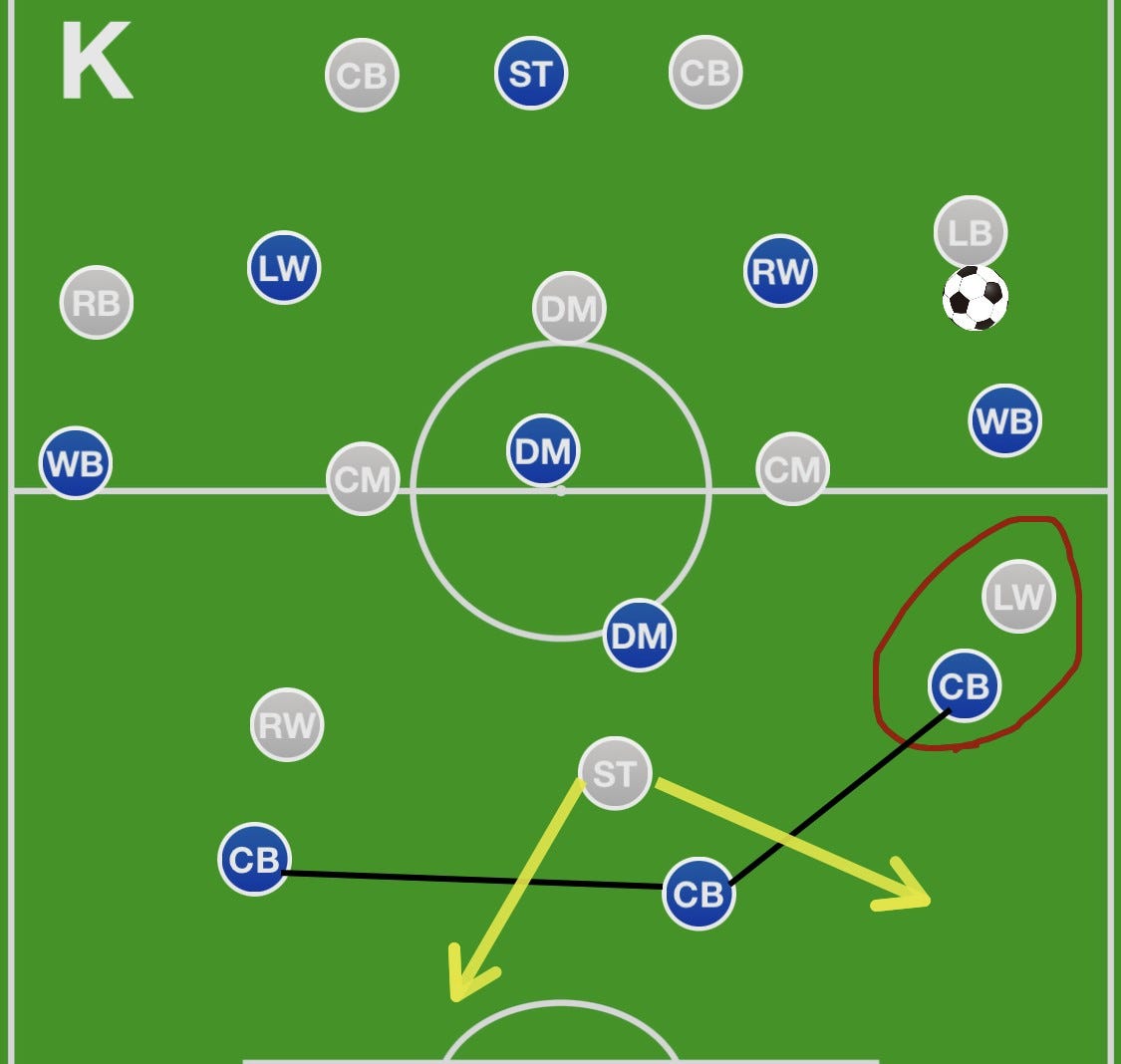
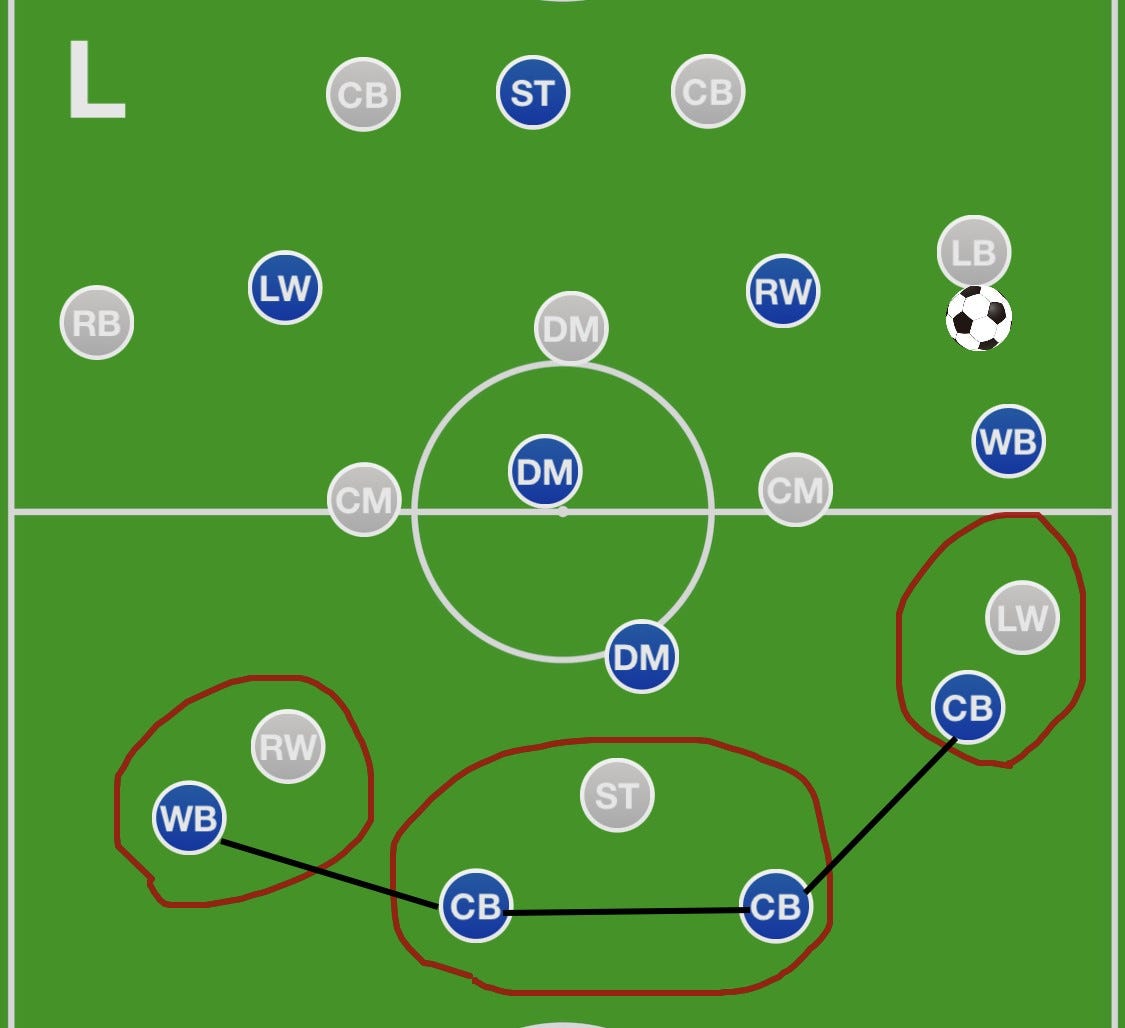
Now, while RLC can add a lot in attack, the question remains, what about in defense? More specifically, who is going to mark Vinicius Jr.? In my opinion, there is no way RLC, being inexperienced in such position, be given the responsibility of marking Vinicius. As a consequence, it would be up to Chelsea’s RCB to mark Vinicius (H). In this case, I reckon the only Chelsea player that can keep up with Vinicius is Reece James. The problem with this is that, Vinicius is not an inside forward whose staring position is inverted between the lines. Instead, he often begins his movements from with LM positions as such (I). As a result, having our RCB man-mark Vinicius, it will inevitably stretch our back 3 as such (J-K), making the likes of Benzema possibly more dangerous.
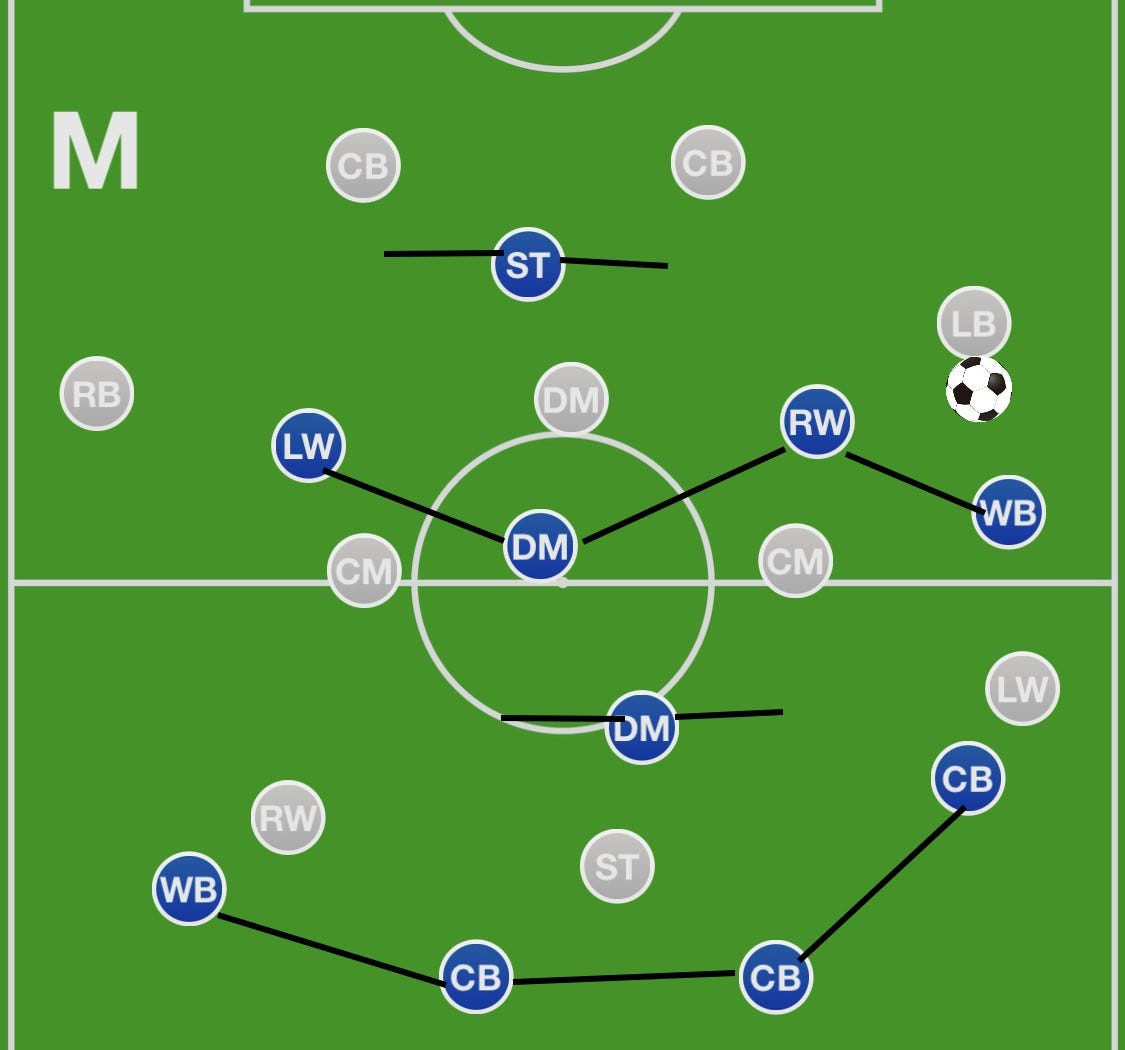
How can we avoid this? In this case, it is paramount that Chelsea’s LWB drop back into LB positions to create a back-4 as such (L). Creating a back 4 would allow for such gaps to be closed, making movements in behind more difficult for Real Madrid. All in all, this would result in us defending in a 4-1-4-1 shape (M), a shape that Tuchel prefers in defense. That being said, while doing so helps us defensively, it means that Alonso (LWB) wouldn’t be able to attack freely as usual. Would this be possible in a match where we need multiple goals in order to win? For these reasons, Tuchel has a lot of thinking to do, with a season defining tie approaching on Tuesday.
Written by: Ryan Gunness
Masterclass. Thank you